ERPNext vs Certinia (FinancialForce): 2026 Comparison
Independent, vendor-neutral side-by-side comparison of ERPNext and Certinia (FinancialForce) — pricing, modules, industry fit, pros, cons, and which ERP wins which scenario.
Make this decision faster
Free buyer's guides for both systems — real pricing and what to ask vendors
Guides cover real pricing, implementation and what to ask vendors. Partner directories are vendor-neutral. All free, no sales calls.
ERPNext fits small businesses and startups wanting free, self-hosted erp; Certinia (FinancialForce) fits professional services firms already on salesforce.
ERPNext and Certinia (FinancialForce) both serve the ERP market but solve different problems. ERPNext is typically chosen by organisations that need small businesses and startups wanting free, self-hosted erp — especially in Manufacturing, Retail, Education. Certinia (FinancialForce) tends to win in Professional Services, Software / SaaS where professional services firms already on salesforce. Pricing is a key differentiator: ERPNext starts at $0 (self-hosted), Certinia (FinancialForce) at $100/user/mo. For most mid-market buyers, the right choice depends on industry depth, existing technology stack, and the speed of implementation you need — we recommend a structured shortlist and a hands-on demo of both products against your specific requirements before committing.
Pick ERPNext if
Businesses needing small businesses and startups wanting free, self-hosted erp, operating in Manufacturing or Retail, and budgeting around $0 (self-hosted).
Pick Certinia (FinancialForce) if
Businesses needing professional services firms already on salesforce, operating in Professional Services or Software / SaaS, and budgeting around $100/user/mo.
ERPNext vs Certinia (FinancialForce): full comparison
Independent side-by-side across pricing, implementation and all 14 ERP module areas. Ratings reflect depth of native capability, not availability — a module marked Basic exists but is commonly supplemented.
 ERPNext Frappe Technologies 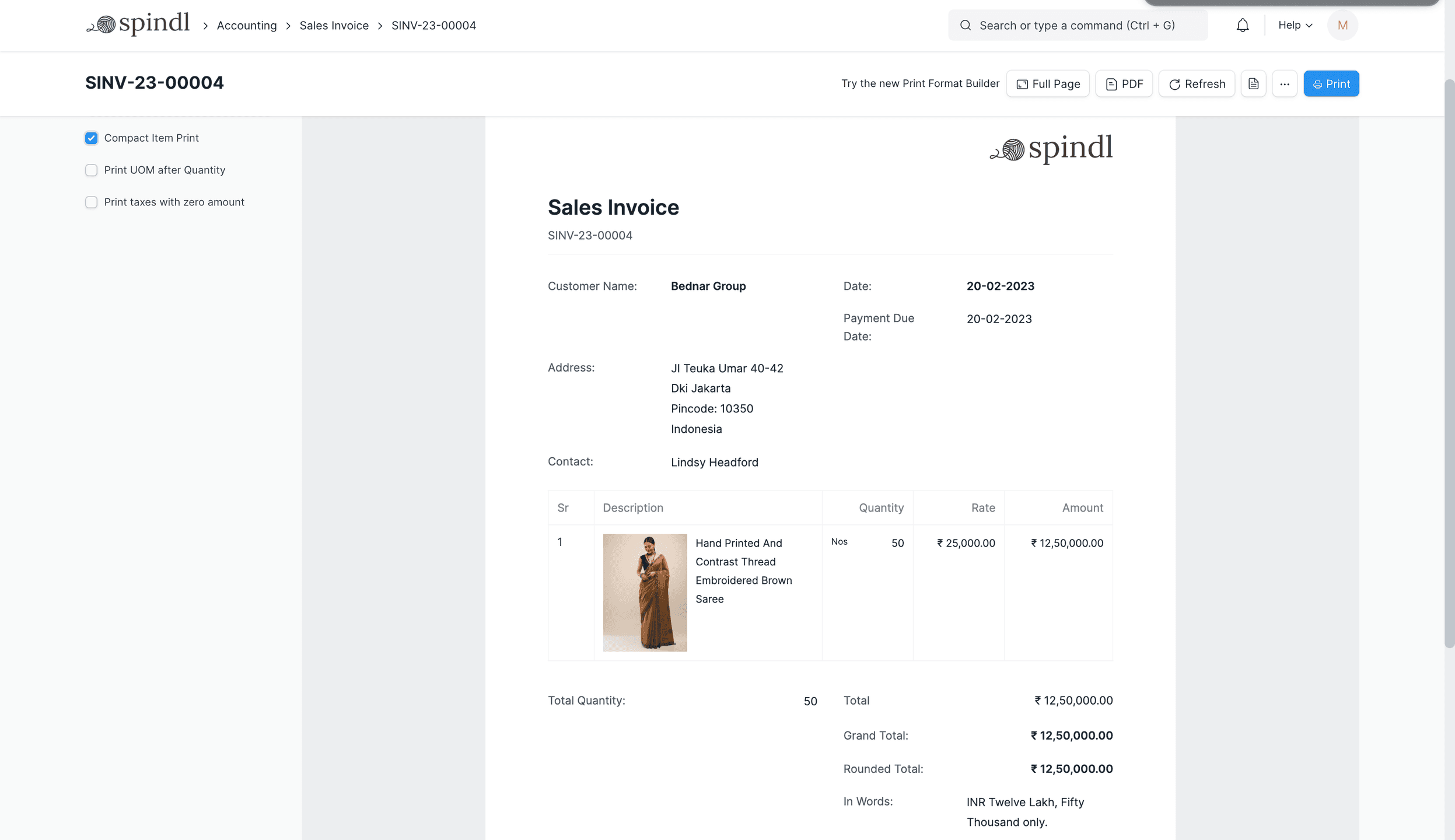 |  Certinia (FinancialForce) Certinia 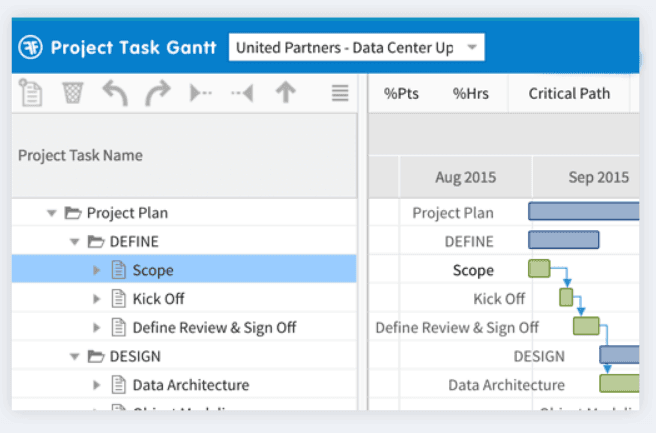 | |
|---|---|---|
| Best for | Small businesses and startups wanting free, self-hosted ERP | Professional services firms already on Salesforce |
| Company size | 1-50, 51-250 | 251-1000, 1001-5000 |
| Deployment | Cloud, On-Premise | Cloud |
| Starting price | $0 (self-hosted)View pricing | $100/user/moView pricing |
| Pricing tier | budget | premium |
| Implementation | 1–3 months | 3–7 months |
| Typical cost | $0–$30K | $100K–$500K |
| Module Capabilities | ||
Finance & AccountingFull Finance & Accounting breakdown | Moderate
| Strong
|
ManufacturingFull Manufacturing breakdown | Moderate
| — Not natively covered |
Supply ChainFull Supply Chain breakdown | Moderate
| Basic
|
SalesFull Sales breakdown | Moderate
| Strong
|
HR & PayrollFull HR & Payroll breakdown | — Not natively covered | Moderate
|
Project ManagementFull Project Management breakdown | Moderate
| Strong
|
Inventory ManagementFull Inventory Management breakdown | Strong
| Basic
|
ProcurementFull Procurement breakdown | Moderate
| Moderate
|
Warehouse ManagementFull Warehouse Management breakdown | Moderate
| — Not natively covered |
EcommerceFull Ecommerce breakdown | Moderate
| — Not natively covered |
Business IntelligenceFull Business Intelligence breakdown | Basic
| Strong
|
Quality ManagementFull Quality Management breakdown | Moderate
| — Not natively covered |
Field ServiceFull Field Service breakdown | Basic
| Basic
|
Asset ManagementFull Asset Management breakdown | Moderate
| — Not natively covered |

SAP S/4HANA Public Cloud
SAP SE
Mid-market and standardised enterprises wanting fast time-to-value
Starts
$180/user/mo
Typical TCV
$150K–$600K
Go-live
3–6 months
Industry fit
Module fit
Fastest-growing S/4HANA edition — chosen by mid-market enterprises and subsidiaries of Fortune 500 companies
SAP S/4HANA Private Cloud
SAP SE
Large, complex enterprises needing deep customisation and controlled upgrades
Starts
Custom
Typical TCV
$500K–$5M+
Go-live
6–18 months
Industry fit
Module fit
Centrepiece of RISE with SAP — chosen by Fortune 500 manufacturers and global enterprises migrating from ECC
SAP Business One
SAP SE
Small to midsize businesses wanting SAP reliability
Starts
$95/user/mo
Typical TCV
$50K–$250K
Go-live
3–6 months
Industry fit
Module fit
75,000+ customers across 170 countries — SAP's most popular SMB ERP
SAP Business ByDesign
SAP SE
Midsize companies or subsidiaries needing cloud-first SAP
Starts
$120/user/mo
Typical TCV
$100K–$400K
Go-live
4–8 months
Industry fit
Module fit
Trusted by midsize subsidiaries of SAP S/4HANA parent companies worldwide

Oracle NetSuite
Oracle
Fast-growing mid-market companies wanting unified cloud ERP
Starts
$99/user/mo
Typical TCV
$100K–$500K
Go-live
4–9 months
Industry fit
Module fit
37,000+ organisations run on NetSuite — the world's #1 cloud ERP

Oracle ERP Cloud
Oracle
Large enterprises moving from on-premise Oracle to cloud
Starts
Custom
Typical TCV
$400K–$3M+
Go-live
9–18 months
Industry fit
Module fit
Chosen by 30,000+ enterprise customers including FedEx, Dropbox, and BT

Microsoft Dynamics 365
Microsoft
Mid-to-large companies in the Microsoft ecosystem
Starts
$50/user/mo
Typical TCV
$150K–$1M+
Go-live
6–14 months
Industry fit
Module fit
Used by 500,000+ companies worldwide — fastest-growing enterprise ERP

Acumatica
Acumatica (EQT Partners)
Midsize companies wanting unlimited users and flexible cloud ERP
Starts
Custom
Typical TCV
$75K–$350K
Go-live
4–8 months
Industry fit
Module fit
10,000+ midsize companies choose Acumatica — highest-rated cloud ERP by Gartner peers

Epicor Kinetic
Epicor Software
Discrete and mixed-mode manufacturers
Starts
$100/user/mo
Typical TCV
$100K–$500K
Go-live
5–10 months
Industry fit
Module fit
20,000+ manufacturers rely on Epicor — a leader in discrete manufacturing ERP

Sage X3
Sage Group
Midsize process manufacturers and distributors
Starts
$100/user/mo
Typical TCV
$100K–$400K
Go-live
4–9 months
Industry fit
Module fit
Deployed by 5,000+ mid-market process manufacturers across 70 countries
Sage Intacct
Sage Group
Service companies and nonprofits needing deep financial management
Starts
Custom
Typical TCV
$50K–$200K
Go-live
3–6 months
Industry fit
Module fit
AICPA's preferred financial management solution — 19,000+ customers

Infor CloudSuite
Infor (Koch Industries)
Large enterprises wanting industry-specific cloud ERP
Starts
Custom
Typical TCV
$300K–$2M+
Go-live
9–18 months
Industry fit
Module fit
65,000+ customers across industry-specific editions — backed by Koch Industries
Infor M3
Infor (Koch Industries)
Process manufacturers (food, chemicals, pharma) needing batch/formula control
Starts
Custom
Typical TCV
$250K–$1.5M
Go-live
8–15 months
Industry fit
Module fit
Trusted by leading food & pharma manufacturers for batch traceability and compliance

IFS Applications
IFS AB
Asset-intensive industries needing ERP, EAM, and field service in one platform
Starts
$100/user/mo
Typical TCV
$200K–$1M+
Go-live
6–14 months
Industry fit
Module fit
10,000+ customers — recognised leader in EAM and field service by Gartner

SYSPRO
SYSPRO
SMB manufacturers and distributors in 50–500 employee range
Starts
$75/user/mo
Typical TCV
$50K–$250K
Go-live
3–6 months
Industry fit
Module fit
15,000+ manufacturers and distributors across 60+ countries

Workday
Workday Inc.
People-centric organisations needing unified HR + finance
Starts
Custom
Typical TCV
$300K–$2M+
Go-live
6–12 months
Industry fit
Module fit
60% of Fortune 500 use Workday for HR — expanding rapidly into finance

Odoo
Odoo SA
Small businesses and startups wanting affordable, modular ERP
Starts
$24.90/user/mo
Typical TCV
$10K–$80K
Go-live
1–4 months
Industry fit
Module fit
12 million+ users worldwide — fastest-growing open-source ERP

QAD Adaptive ERP
QAD Inc. (Thoma Bravo)
Automotive, life sciences, and CPG manufacturers
Starts
$90/user/mo
Typical TCV
$150K–$600K
Go-live
5–10 months
Industry fit
Module fit
Trusted by 2,000+ automotive and life sciences manufacturers globally
Epicor Prophet 21
Epicor Software
Wholesale distributors needing best-in-class distribution ERP
Starts
$75/user/mo
Typical TCV
$60K–$300K
Go-live
3–7 months
Industry fit
Module fit
Purpose-built for wholesale distribution — 5,000+ distributor customers
Certinia (FinancialForce)
Certinia
Professional services firms already on Salesforce
Starts
$100/user/mo
Typical TCV
$100K–$500K
Go-live
3–7 months
Industry fit
Module fit
1,600+ services firms run financials and PSA natively on Salesforce
ERPNext
Frappe Technologies
Small businesses and startups wanting free, self-hosted ERP
Starts
$0 (self-hosted)
Typical TCV
$0–$30K
Go-live
1–3 months
Industry fit
Module fit
Used by 15,000+ companies in 150 countries — 100% free and open-source

Unit4 ERP
Unit4
Public sector, education, and professional services organisations
Starts
$95/user/mo
Typical TCV
$100K–$500K
Go-live
5–10 months
Industry fit
Module fit
6,000+ public sector and education organisations across 30+ countries

Priority ERP
Priority Software
Midsize manufacturers and distributors wanting flexibility
Starts
$60/user/mo
Typical TCV
$40K–$200K
Go-live
3–6 months
Industry fit
Module fit
75,000+ users across manufacturing, retail, and distribution

Deltek Costpoint
Deltek (Roper Technologies)
Government contractors, A&E firms, and project-centric businesses
Starts
$75/user/mo
Typical TCV
$80K–$400K
Go-live
4–9 months
Industry fit
Module fit
30,000+ users at government contractors, A&E firms, and consulting companies

Global Shop Solutions
Global Shop Solutions
Small to midsize job shops and discrete manufacturers
Starts
$65/user/mo
Typical TCV
$30K–$150K
Go-live
2–5 months
Industry fit
Module fit
5,000+ small manufacturers — one of few all-in-one shop floor ERP vendors

Digit
Digit Software
SMB and mid-market manufacturers and distributors that need real-time MRP, inventory, and shop-floor traceability without enterprise cost
Starts
$400/mo
Typical TCV
$6K–$50K
Go-live
2–8 weeks
Industry fit
Module fit
Used by operations-led manufacturers and distributors such as VersaCourt, On Foot Innovations, and No.1 Raw Materials
Sage 100
Sage Group
Small manufacturers and distributors wanting proven on-premise ERP
Starts
$55/user/mo
Typical TCV
$25K–$120K
Go-live
3–6 months
Industry fit
Module fit
Trusted by tens of thousands of SMB manufacturers and distributors across North America
Sage 300
Sage Group
Mid-market businesses needing multi-entity and multi-currency support
Starts
$75/user/mo
Typical TCV
$50K–$250K
Go-live
4–8 months
Industry fit
Module fit
Widely adopted mid-market ERP across distribution and services industries globally
JD Edwards EnterpriseOne
Oracle
Large manufacturers and distributors with complex operations
Starts
Custom
Typical TCV
$500K–$5M
Go-live
9–18 months
Industry fit
Module fit
10,000+ customers globally — a workhorse in manufacturing and distribution for 40+ years

Plex Manufacturing Cloud
Rockwell Automation
Discrete and process manufacturers wanting cloud-native shop floor ERP
Starts
$120/user/mo
Typical TCV
$100K–$600K
Go-live
4–9 months
Industry fit
Module fit
700+ manufacturing customers with 8B+ recorded production transactions daily

Deacom ERP
ECI Software Solutions
Process and batch manufacturers in food, chemical, and pharma industries
Starts
$100/user/mo
Typical TCV
$80K–$400K
Go-live
4–8 months
Industry fit
Module fit
Trusted by 200+ process manufacturers for batch, formulation, and compliance management

Cetec ERP
Cetec ERP
Small job shops and contract manufacturers wanting affordable cloud ERP
Starts
$40/user/mo
Typical TCV
$10K–$60K
Go-live
1–3 months
Industry fit
Module fit
1,000+ small job shops run production on Cetec ERP daily

Rootstock Cloud ERP
Rootstock Software
Manufacturers and distributors already on Salesforce wanting native ERP
Starts
$150/user/mo
Typical TCV
$100K–$500K
Go-live
4–8 months
Industry fit
Module fit
200+ manufacturers run operations on Rootstock + Salesforce — seamless CRM-to-ERP

Genius ERP
Genius Solutions
Engineer-to-order and custom manufacturers with complex project-based production
Starts
$80/user/mo
Typical TCV
$40K–$200K
Go-live
3–6 months
Industry fit
Module fit
Trusted by 1,000+ custom and engineer-to-order manufacturers across North America

abas ERP
abas Software AG
Mid-market discrete manufacturers with multi-site global operations
Starts
$90/user/mo
Typical TCV
$60K–$350K
Go-live
4–9 months
Industry fit
Module fit
3,000+ manufacturing companies in 70+ countries — strong in DACH and Asia-Pacific
Microsoft Dynamics GP
Microsoft
Existing GP customers planning migration to Dynamics 365 Business Central
Starts
$75/user/mo
Typical TCV
$40K–$200K
Go-live
3–6 months
Industry fit
Module fit
40,000+ organisations — massive installed base migrating to Dynamics 365 Business Central
SAP ECC
SAP SE
Existing SAP ECC customers planning S/4HANA migration
Starts
Custom
Typical TCV
$1M–$50M+
Go-live
12–36 months
Industry fit
Module fit
30,000+ enterprise customers — the backbone of global manufacturing and supply chains for 30 years

Aptean ERP
Aptean
Food, beverage, and industrial manufacturers needing industry-specific ERP
Starts
$100/user/mo
Typical TCV
$80K–$400K
Go-live
5–10 months
Industry fit
Module fit
4,000+ manufacturers — strong in food, beverage, and industrial verticals

Datacor ERP
Datacor
Chemical, coatings, and adhesive manufacturers needing regulatory compliance
Starts
$85/user/mo
Typical TCV
$40K–$200K
Go-live
3–6 months
Industry fit
Module fit
1,200+ chemical and process manufacturers — deep in paints, coatings, and adhesives

BatchMaster ERP
BatchMaster Software
Process manufacturers in food, pharma, and chemical industries
Starts
$70/user/mo
Typical TCV
$25K–$120K
Go-live
2–5 months
Industry fit
Module fit
1,500+ process manufacturers across food, pharma, and chemical verticals

E2 Shop System
Shoptech (ECI Software Solutions)
Small job shops and machine shops wanting simple shop management
Starts
$45/user/mo
Typical TCV
$10K–$60K
Go-live
1–3 months
Industry fit
Module fit
4,000+ job shops — one of the most popular shop management systems in North America

Rillet
Rillet
Mid-market SaaS and subscription businesses leaving NetSuite or Sage Intacct that want a faster close
Starts
Custom
Typical TCV
Not publicly disclosed
Go-live
4–10 weeks
Industry fit
Module fit
Raised a $70M Series B co-led by Andreessen Horowitz and ICONIQ in August 2025

DualEntry
DualEntry
Mid-market to pre-IPO companies that need audit-ready accounting with heavy automation
Starts
Custom
Typical TCV
Not publicly disclosed
Go-live
4–12 weeks
Industry fit
Module fit
Raised a $90M Series A co-led by Lightspeed and Khosla in October 2025

Campfire
Campfire
Venture-backed startups outgrowing QuickBooks that want revenue recognition without moving to NetSuite
Starts
Custom
Typical TCV
Not publicly disclosed
Go-live
3–10 weeks
Industry fit
Module fit
Raised a $65M Series B co-led by Accel and Ribbit in October 2025

Light
Light Inc
Fast-growing, multi-entity technology companies (30–5,000 employees) with lean finance teams replacing a fragmented stack or a legacy ERP
Starts
$35,000/yr
Typical TCV
$35K–$150K
Go-live
2–12 weeks
Industry fit
Module fit
Used by multi-entity technology companies including Tillo, KeyShot, and Alva Labs; SOC 1 & SOC 2 Type II audited

Everest Systems
Everest Systems
Software companies wanting multi-book accounting and revenue recognition in a single modern system
Starts
Custom
Typical TCV
Not publicly disclosed
Go-live
8–16 weeks
Industry fit
Module fit
Around $140M raised from Sutter Hill, Altimeter, Redpoint and D1 before leaving stealth in November 2024

Doss
Doss
Multi-channel brands and distributors that need real operations depth alongside an existing accounting system
Starts
Custom
Typical TCV
Not publicly disclosed
Go-live
4–12 weeks
Industry fit
Module fit
Raised a $55M Series B co-led by Madrona and Premji Invest in March 2026

Knowlix
Knowlix GmbH
Micro and small businesses — especially project-based service firms — that want ERP breadth without an implementation project
Starts
$24.90/user/mo
Typical TCV
$300–$15K/year
Go-live
Hours to days (self-serve)
Industry fit
Module fit
Munich-based AI research lab founded in 2021; its earlier document app PaperChill reached 50,000+ users
Microsoft Dynamics 365 Business Central
Microsoft
SMBs outgrowing QuickBooks, Sage 50 or Xero that are already on Microsoft 365
Starts
$80/user/mo
Typical TCV
$75K–$400K (3-year)
Go-live
2–6 months
Industry fit
Module fit
Microsoft reports 50,000+ organizations worldwide run Business Central
Oracle E-Business Suite
Oracle
Large enterprises with heavily customised on-premise Oracle estates
Starts
Custom
Typical TCV
$500,000–$5,000,000+ perpetual + 22%/yr
Go-live
12–24 months
Industry fit
Module fit
Runs core finance and supply chain at a large share of the Fortune 500

QuickBooks Desktop Enterprise
Intuit
Small businesses outgrowing standard QuickBooks but not ready for full ERP
Starts
$142/user/mo
Typical TCV
$3,000–$10,000/yr
Go-live
1–3 months
Industry fit
Module fit
The most common system US mid-market businesses run before moving to a full ERP

MRPeasy
MRPeasy
Small manufacturers with 10–200 employees wanting fast MRP without ERP weight
Starts
$49/user/mo
Typical TCV
$6,000–$25,000/yr
Go-live
1–3 months
Industry fit
Module fit
One of the most widely adopted self-serve MRP systems among small manufacturers
Deltek Vantagepoint
Deltek
AEC and consulting firms managing projects, resources and billing together
Starts
Custom
Typical TCV
$25,000–$120,000/yr
Go-live
3–6 months
Industry fit
Module fit
Deltek's flagship for AEC firms and consultancies, and the named successor to Deltek Vision

CMiC
CMiC
General contractors wanting job costing and field operations in one database
Starts
Custom
Typical TCV
$50,000–$150,000+/yr
Go-live
6–18 months
Industry fit
Module fit
Used by roughly a quarter of the contractors on ENR's Top 400 Contractors list
Brightpearl by Sage
Sage Group
Multichannel retailers and DTC brands needing order and inventory automation
Starts
Custom
Typical TCV
$18,000–$120,000/yr
Go-live
2–4 months
Industry fit
Module fit
Used by fast-growth multichannel retailers; acquired by Sage to anchor its retail operations offering

Yardi Voyager
Yardi Systems
Real estate owners and property managers running mixed portfolios
Starts
Custom
Typical TCV
$30,000–$150,000+/yr
Go-live
4–12 months
Industry fit
Module fit
Used across mid-market and enterprise real-estate portfolios worldwide

JobBOSS²
ECI Software Solutions
Job shops and contract machinists quoting high volumes of custom work
Starts
Custom
Typical TCV
$3,000–$30,000/yr
Go-live
2–5 months
Industry fit
Module fit
A long-established job-shop ERP with a large installed base among small US manufacturers
Microsoft Dynamics NAV
Microsoft
Companies maintaining or planning an exit from an existing NAV estate
Starts
Custom
Typical TCV
$20,000–$100,000 perpetual + support
Go-live
3–8 months
Industry fit
Module fit
One of the largest installed bases in mid-market ERP, now migrating to Business Central

Intuit Enterprise Suite
Intuit
Growing businesses outgrowing QuickBooks but not ready for full ERP
Starts
Custom
Typical TCV
$7,800–$15,000/yr
Go-live
1–3 months
Industry fit
Module fit
Intuit's upmarket answer for QuickBooks customers outgrowing QuickBooks Online Advanced
Sage 200
Sage Group
UK businesses outgrowing Sage 50 that want to stay inside the Sage ecosystem
Starts
£374/mo
Typical TCV
£15,000–£60,000/yr
Go-live
3–6 months
Industry fit
Module fit
One of the most widely deployed mid-market ERP systems in the UK

MYOB Acumatica
MYOB
Australian and NZ mid-market businesses wanting local payroll and compliance on a cloud ERP
Starts
A$148/user/mo
Typical TCV
A$60,000–A$250,000/yr
Go-live
3–6 months
Industry fit
Module fit
MYOB's flagship mid-market ERP across Australia and New Zealand
Public pricing rarely reflects what you'll actually pay
Real ERPNext and Certinia (FinancialForce) quotes vary 3–10× based on modules, edition, users, and negotiation. Tell us your specs — we'll send back realistic ranges.
Pros & Cons
ERPNext
Pros
- +Completely free and open source (GPLv3)
- +Covers accounting, manufacturing, stock, CRM, projects and quality in one system
- +Easy to customise with Python and the Frappe framework
- +Active community with regular updates
Cons
- -HR and payroll are no longer part of ERPNext — they ship as the separate Frappe HR app
- -Healthcare, education, agriculture and non-profit verticals have also been split into separate apps
- -Enterprise reporting is basic compared to paid ERPs
- -Self-hosting requires DevOps expertise
Certinia (FinancialForce)
Pros
- +Runs natively on Salesforce platform — single data model with CRM
- +Best-in-class professional services automation (PSA)
- +Real-time project profitability and resource planning
- +Seamless Salesforce ecosystem and AppExchange integrations
Cons
- -Requires Salesforce licenses on top of Certinia
- -No manufacturing, warehouse, or asset management
- -Not suited for product-based businesses
- -Total cost is high when including Salesforce platform fees
When to Choose ERPNext
- You need an ERP best suited for small businesses and startups wanting free, self-hosted ERP
- Your company has 1-50 or 51-250 employees
- You operate in Manufacturing, Retail, Education
- You prefer cloud / on-premise deployment
- Your budget aligns with $0 (self-hosted) starting price
When to Choose Certinia (FinancialForce)
- You need an ERP best suited for professional services firms already on Salesforce
- Your company has 251-1000 or 1001-5000 employees
- You operate in Professional Services, Software / SaaS
- You prefer cloud deployment
- Your budget aligns with $100/user/mo starting price
What analysts and customers say
ERPNext · analyst & review ratings
G2
4.4/5
105 reviews
Capterra
4.5/5
95 reviews
Certinia (FinancialForce) · analyst & review ratings
G2
3.9/5
180 reviews
What Users Say
“Used by 15,000+ companies in 150 countries — 100% free and open-source”
“1,600+ services firms run financials and PSA natively on Salesforce”
Industry Fit Analysis
| Industry | ERPNext | Certinia (FinancialForce) |
|---|---|---|
| Education | Primary | Secondary |
| Nonprofits | Primary | Secondary |
| Professional Services | Secondary | Primary |
Company Size Fit
| Company Size | ERPNext | Certinia (FinancialForce) |
|---|---|---|
| 1–50 employees | ✓ | — |
| 51–250 employees | ✓ | — |
| 251–1000 employees | — | ✓ |
| 1,001–5000 employees | — | ✓ |
| 5,000+ employees | — | — |
Other ERP Comparisons
See how ERPNext compares to other ERPs
See how Certinia (FinancialForce) compares to other ERPs
Explore Each Vendor
All ERPNext Resources
All Certinia (FinancialForce) Resources
Pricing & Costs
Comparisons
Frequently Asked Questions
Is ERPNext better than Certinia (FinancialForce)?
It depends on your business needs. ERPNext is best for small businesses and startups wanting free, self-hosted ERP, while Certinia (FinancialForce) is best for professional services firms already on Salesforce. ERPNext starts at $0 (self-hosted) and Certinia (FinancialForce) starts at $100/user/mo.
How does ERPNext pricing compare to Certinia (FinancialForce)?
ERPNext uses a open-source pricing model starting at $0 (self-hosted), while Certinia (FinancialForce) uses a per-user model starting at $100/user/mo. ERPNext typical total cost is $0–$30K vs $100K–$500K for Certinia (FinancialForce).
Which is better for manufacturing: ERPNext or Certinia (FinancialForce)?
Both vendors serve manufacturing companies. ERPNext is typically chosen by 1-50, 51-250 employee organizations, while Certinia (FinancialForce) targets 251-1000, 1001-5000 employee companies. Consider your company size and specific module needs to decide.
How long does it take to implement ERPNext vs Certinia (FinancialForce)?
ERPNext typically takes 1–3 months to implement, while Certinia (FinancialForce) takes 3–7 months. Implementation time depends on module scope, data migration complexity, customisation requirements, and organisational readiness.
What modules does ERPNext have that Certinia (FinancialForce) doesn't?
ERPNext offers Manufacturing, Warehouse Management, Ecommerce, Quality Management, Asset Management which Certinia (FinancialForce) does not have. Certinia (FinancialForce) offers HR & Payroll which ERPNext does not have. Unlock the detailed comparison on this page to see every module rated Strong, Moderate or Basic for both systems.
Can I migrate from ERPNext to Certinia (FinancialForce)?
Yes, migration from ERPNext to Certinia (FinancialForce) is possible and is a common path in the ERP market. Key considerations include data migration (master data, transactional history), process re-mapping, user retraining, and integration reconfiguration. Most migrations take 4–12 months with an experienced implementation partner. We recommend engaging an independent ERP consultant to assess migration scope.
Which ERP is better for small businesses: ERPNext or Certinia (FinancialForce)?
ERPNext is better suited for small businesses, targeting 1-50, 51-250 employee companies with pricing starting at $0 (self-hosted). Certinia (FinancialForce) primarily serves 251-1000, 1001-5000 employee organisations and may be over-engineered and over-priced for small businesses.
Compare for Your Industry
See how ERPNext and Certinia (FinancialForce) compare for your specific industry:
Related Resources
Certinia (FinancialForce) Pricing & Costs
Compare Certinia (FinancialForce) pricing, licensing, and implementation costs.
PricingERPNext Pricing & Costs
Compare ERPNext pricing, licensing, and implementation costs.
OverviewERPNext Review 2026: Free Open-Source ERP
ERPNext is a free, open-source ERP (GPLv3) from Frappe. See real pros, cons, pricing from $0 self-hosted, and how it compares to Odoo and NetSuite.
OverviewCertinia (FinancialForce) Review 2026 | PSA & ERP Guide
Certinia is the leading Salesforce-native PSA and ERP. See honest pros/cons, real pricing, and how it compares to Sage Intacct and NetSuite.
OverviewERPNext Review 2026: Free Open-Source ERP
ERPNext is a free, open-source ERP (GPLv3) from Frappe. See real pros, cons, pricing from $0 self-hosted, and how it compares to Odoo and NetSuite.
Need a personalized recommendation?
Tell us about your business and we'll help you shortlist the best ERP systems for your needs.