
Workday Modules & Capabilities
Workday is rated across 8 of 14 ERP modules, 5 of them a core strength and 95 documented capabilities catalogued across those modules.
- 8of 14
- Modules rated
- 5
- Core strengths
- 95
- Documented capabilities
- Cloud
- Deployment
Workday module ratings
Ordered strongest to weakest. Each rating reflects standard-edition depth, not what a third-party add-on could bolt on.
Finance & Accounting
strongCore financial management including general ledger, accounts payable/receivable, fixed assets, cash management, and financial reporting. The backbone of any ERP system.
›29 documented capabilities in 6 areas
Finance & Accounting
strong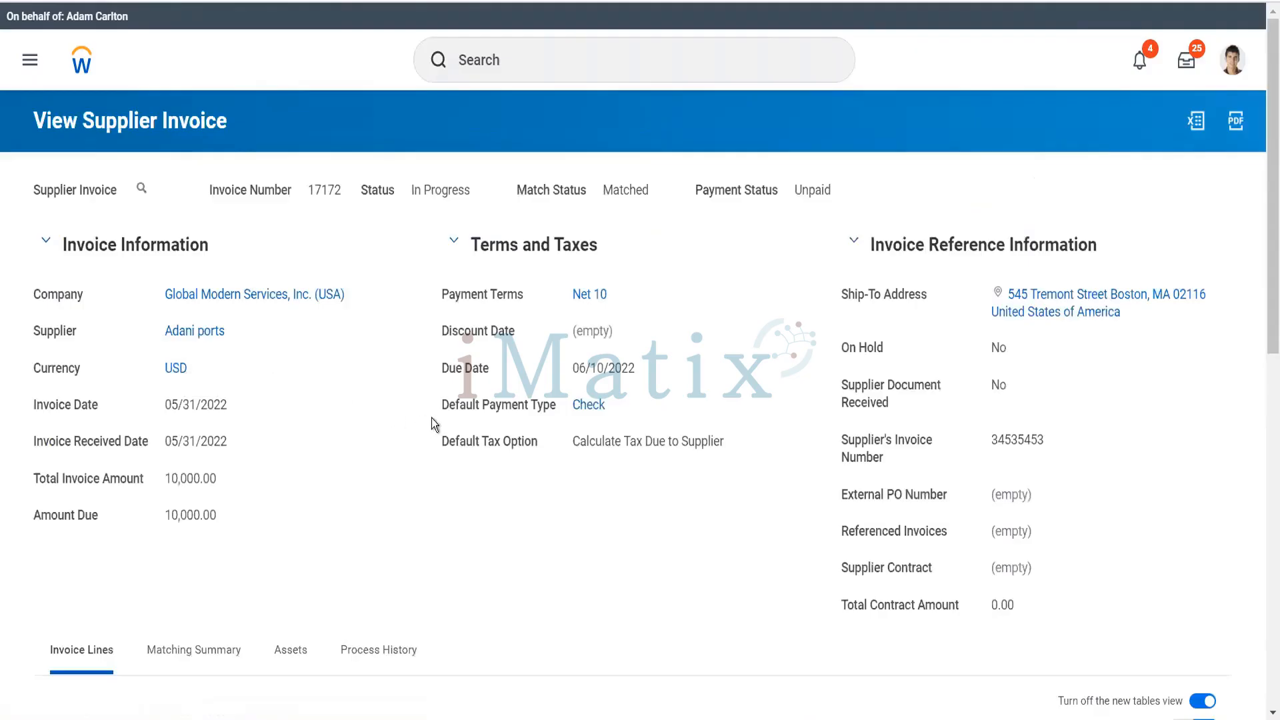
Financial Planning4
Supports budgeting, forecasting, and scenario planning for finance teams.
Budgeting & Forecasting · Scenario Planning · Strategic Financial Planning
Accounting & Close4
Covers the general ledger, a facility for posting entries from external data sources, and period-end close and consolidation.
General Ledger · Accounting Center · Period Close & Consolidation
Revenue Management3
Handles revenue recognition rules and extracts terms from customer contracts to support billing and recognition.
Revenue Recognition · Contract Data Extraction
Workforce Planning4
Models future headcount, cost, and capacity needs against hiring plans.
Headcount & Cost Planning · Workforce Capacity Planning · Org Design & Scenario Modeling
Operational Planning4
Extends planning beyond finance into sales, demand/supply, and project planning across departments.
Sales Planning · Demand & Supply Planning · Project Planning
Other capabilities10
Grant Tracking & Administration · Control Monitoring · Close Task Streamlining · Automated Expense Reporting · Multi-Geography Localization
HR & Payroll
strongHuman resources management including employee records, payroll processing, benefits administration, time and attendance, and talent management.
›32 documented capabilities in 8 areas
HR & Payroll
strongHuman Resource Management3
Maintains core worker records with compliance rules that vary by country, and gives employees self-service access to their own data.
Global Compliance Management · Employee Self-Service
Talent Management4
Supports hiring, learning and development, and internal mobility so employees can move between roles as skills develop.
Talent Acquisition · Learning & Development · Talent Mobility
Workforce Planning4
Models future headcount, cost, and capacity needs against hiring plans.
Headcount & Cost Planning · Workforce Capacity Planning · Org Design & Scenario Modeling
Workforce Management4
Handles shift scheduling, time capture, and absence requests for hourly and shift-based workforces.
Workforce Scheduling · Time Tracking · Absence Management
Employee Experience4
Covers onboarding workflows, a self-service HR help/knowledge layer, and wellness program administration.
Worker Onboarding · HR Service Delivery · Wellness Program Administration
Payroll4
Processes payroll across many countries through a partner network, with reporting and regulatory-change tracking.
Global Payroll Processing · Payroll Reporting & Analytics · Compliance Change Tracking
Skills Cloud3
Maintains a structured skills taxonomy used to identify skill gaps and recommend upskilling paths.
Skills Ontology · Upskilling Recommendations
Other capabilities6
Pulse Feedback Surveys · Contractor Visibility · Contingent Labor Sourcing Integration
Project Management
strongProject planning, resource allocation, time tracking, expense management, and project accounting for project-centric businesses.
›12 documented capabilities in 3 areas
Project Management
strongProject Financials & Billing5
Manages project billing, revenue recognition, profitability analysis, and forecasting for services work.
Project Billing · Project Revenue Recognition · Project Profitability Analysis · Project Forecasting & Budgeting
Time & Expense for Services3
Captures time and expenses from services staff, including mobile entry.
Mobile Time Entry · Expense Tracking with Risk Flags
Other capabilities4
Skill Matching for Staffing · Services Configure-Price-Quote
Procurement
strongPurchase order management, supplier management, requisition workflows, contract management, and spend analytics.
›13 documented capabilities in 3 areas
Procurement
strong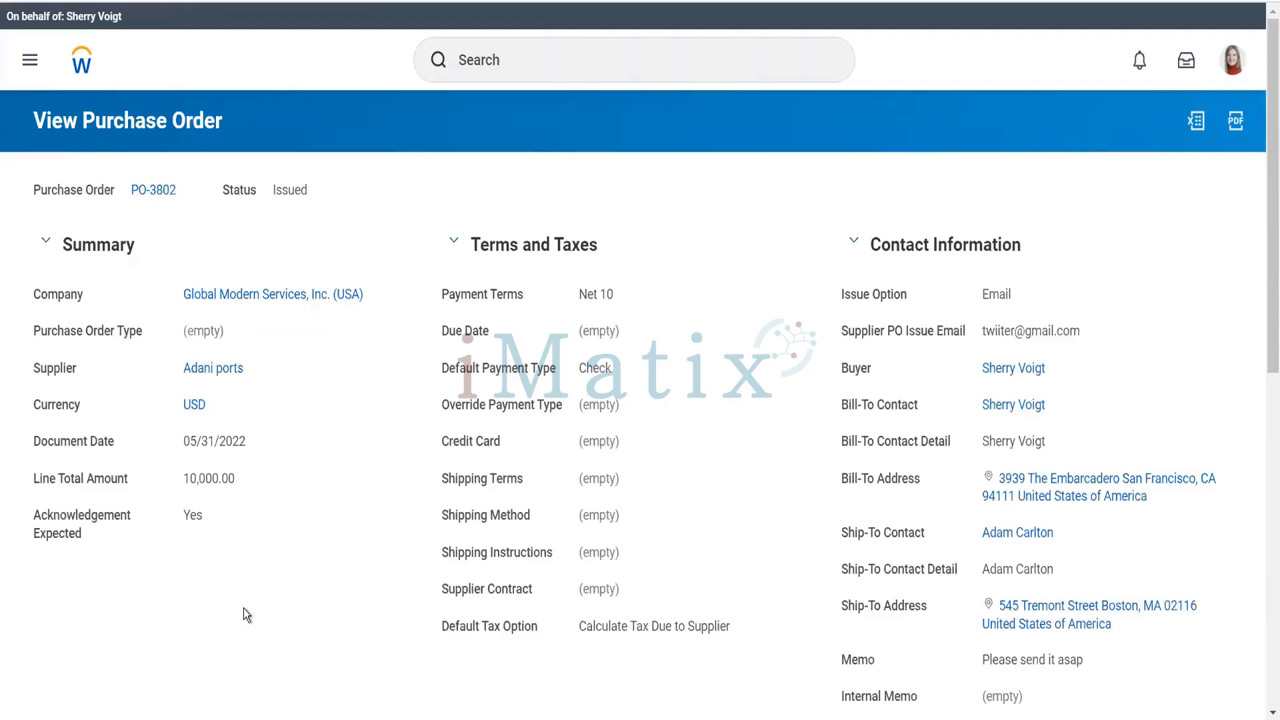
Strategic Sourcing & Contracts3
Runs sourcing events and manages supplier contracts through their lifecycle.
Strategic Sourcing Events · Supplier Contract Lifecycle Management
Procure-to-Pay4
Automates requisitioning and applies purchasing policy at the point of purchase to reduce off-contract buying.
Requisition Automation · Point-of-Purchase Policy Enforcement · Maverick Spend Visibility
Other capabilities6
Supplier Onboarding & Records · Inventory Tracking · Contingent Labor Sourcing Integration
Business Intelligence
strongReporting, dashboards, analytics, and data visualisation capabilities built into the ERP platform for operational and strategic decision-making.
›7 documented capabilities in 2 areas
Business Intelligence
strong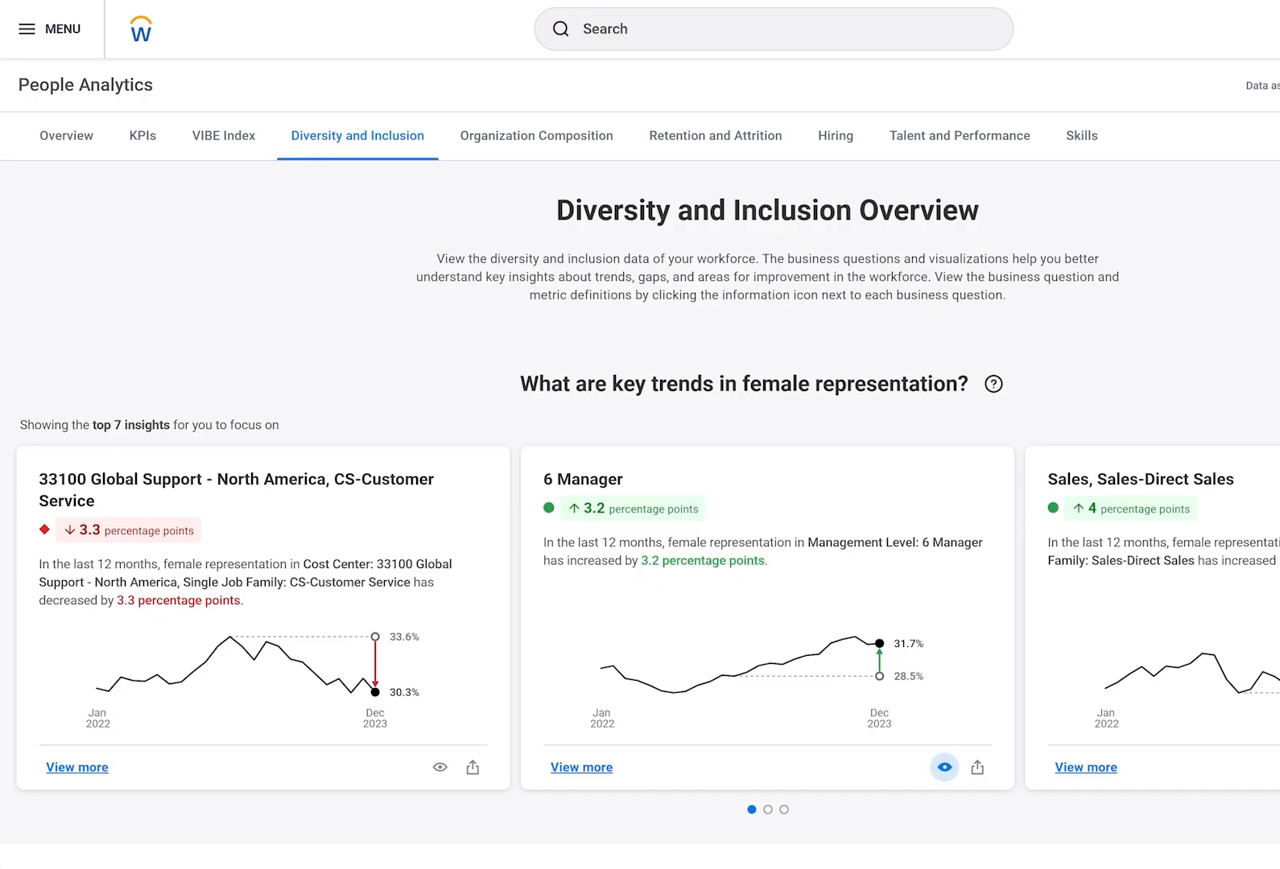
Augmented Analytics3
Surfaces trends and anomalies automatically and presents them through visual discovery boards.
Discovery Boards · People Analytics
Other capabilities4
External Data Blending · Self-Service Report Building
Supply Chain
basicEnd-to-end supply chain visibility including demand planning, supply planning, logistics, supplier management, and supply chain analytics.
Inventory Management
basicInventory tracking, stock management, reorder point planning, multi-location management, and inventory valuation across warehouses and locations.
›2 documented capabilities in 1 areas
Inventory Management
basicInventory2
Tracks stock levels and movements tied to procurement activity.
Inventory Tracking
Asset Management
basicEnterprise asset management including preventive maintenance, asset lifecycle tracking, work order management, and asset depreciation.
Workday does not offer or rate: Manufacturing, Sales, Warehouse Management, Ecommerce, Quality Management, Field Service.
Ready to move on Workday?
Price it, put it head-to-head with alternatives, or talk to a partner who has implemented it.
Workday add-ons & integrations
Extend Workday with best-of-breed software that integrates with it:
Highlighted product links go straight to the vendor and are affiliate links — we may earn a commission if you sign up. This never affects which products we list or how we rank them.
Workday Modules FAQ
What is Workday?
Workday is a cloud enterprise application vendor best known for human capital management (HCM) — payroll, talent, and workforce planning — that has expanded into financial management, procurement, and planning. It's not a full-suite ERP: there's no manufacturing, warehouse, or CRM module, so it fits people-centric organizations rather than product-based businesses.
What does Workday do?
Workday runs the software that large organizations use to manage people and money in one system: hiring, payroll, benefits, workforce planning, and — for customers using its financial management modules — general ledger, procurement, and financial planning and analysis. It's built around a single unified data model so HR and finance data stay in sync without separate integrations.
Is Workday an ERP system?
Workday is best described as a cloud HCM and financial management platform rather than a traditional full-suite ERP. It has no manufacturing, inventory, warehouse, or CRM modules, so it doesn't cover the operational side that a product-based ERP would. For services, healthcare, education, and other people-centric organizations, its finance-plus-HR combination often substitutes for a broader ERP.
Who owns Workday?
Workday, Inc. is an independent, publicly traded company — it is not a subsidiary of a larger software vendor. It was founded by former PeopleSoft executives after PeopleSoft was acquired by Oracle.
What are the Workday financial modules?
Workday's financial management modules cover core accounting (general ledger, AP), procurement, and financial planning and analysis through Workday Adaptive Planning. These are rated strong for financial management and planning, but the platform has no native manufacturing, inventory, or warehouse modules, so it isn't a fit for product-based businesses needing operational ERP alongside finance.
Is Workday a CRM?
No. Workday does not offer a native CRM module — organizations that need one typically integrate a dedicated CRM platform alongside Workday's HCM and financial management modules.